
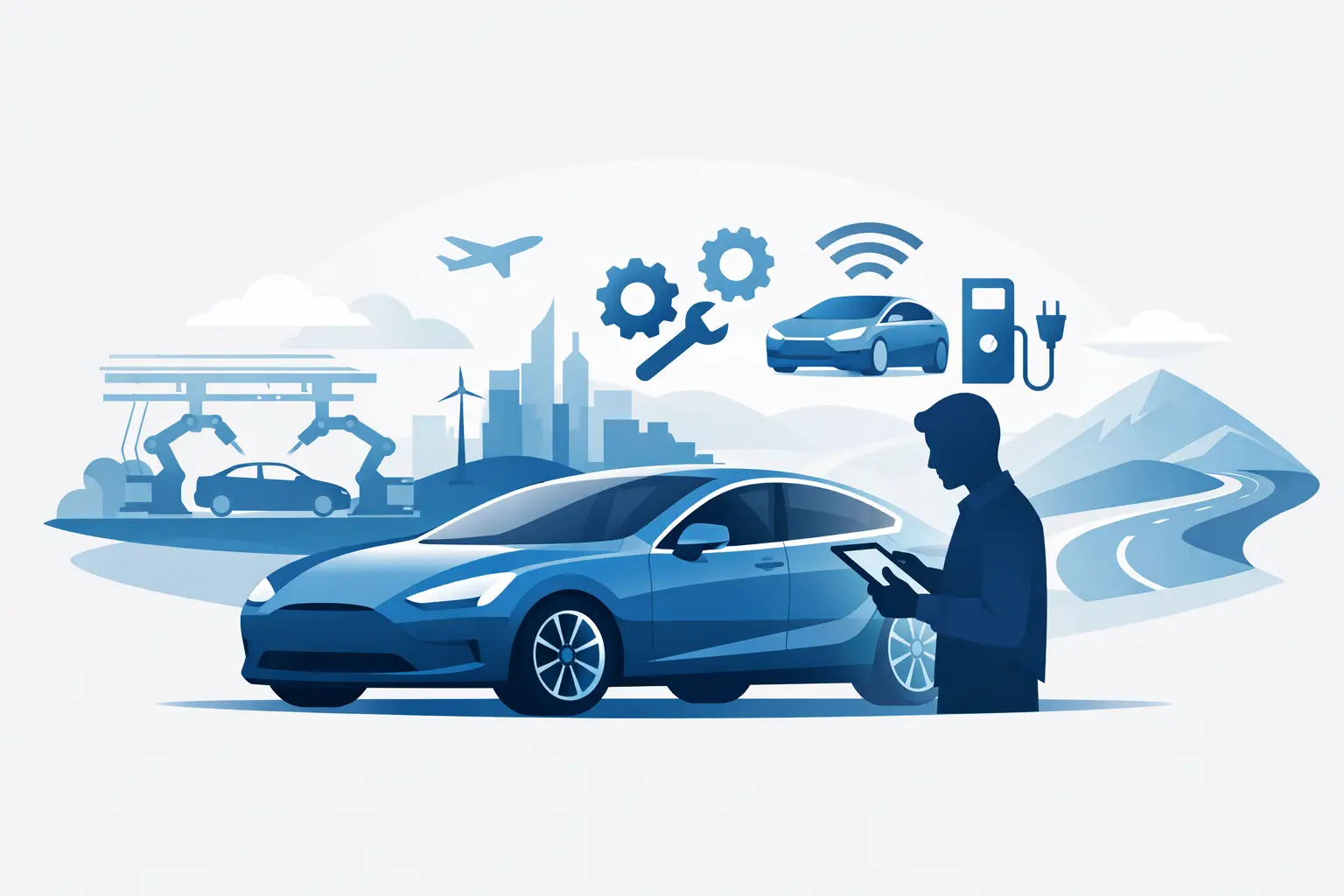
If you searched wat is automotive, you probably were not looking for a vague industry slogan. You wanted a straight answer. In simple terms, automotive refers to anything related to motor vehicles - mainly cars, trucks, SUVs, vans, and the systems, services, and businesses built around them.
That sounds broad because it is broad. Automotive is not just about making cars. It also covers selling them, financing them, repairing them, insuring them, shipping parts, building software for them, and helping people compare their options online. If a business, service, or product exists to support vehicle ownership or vehicle sales, it usually falls under automotive.
What automotive means in plain English
The word automotive is commonly used as an adjective. You will see it in phrases like automotive industry, automotive repair, automotive technology, and automotive parts. In each case, the meaning stays consistent - it describes something connected to motor vehicles.
For most US consumers, the easiest way to think about automotive is this: if it helps someone buy, own, maintain, move, or sell a vehicle, it is part of the automotive space.
That includes obvious categories like dealerships and mechanics. It also includes less obvious ones like online vehicle marketplaces, warranty providers, title services, charging networks, fleet software, roadside assistance, and aftermarket accessory sellers.
What is automotive in the real market?
When people ask what is automotive, they are often really asking where the category begins and ends. The answer depends on context.
In everyday use, automotive usually means passenger vehicles and light trucks. In business use, the category can stretch much further. It may include manufacturing plants, supply chains, logistics companies, auction platforms, lenders, ad technology, and data providers. Some companies never touch a physical vehicle but are still clearly part of the automotive market because they support how vehicles are found, sold, serviced, or managed.
That is why automotive is better understood as an ecosystem than a single industry lane. A shopper may start by researching SUVs, move into pricing tools, compare insurance, schedule a pre-purchase inspection, and later buy tires or book repairs. Every one of those steps belongs to automotive.
The main parts of the automotive industry
To make the term easier to use, it helps to break it into a few core areas.
Vehicle manufacturing
This is the part most people picture first. Automakers design and build vehicles. That includes major brands producing gas, hybrid, and electric models, along with the suppliers making engines, batteries, brakes, electronics, seats, and thousands of other components.
Manufacturing gets most of the attention, but consumers usually interact with the next layer more often.
Retail sales and listings
This includes dealerships, used car sellers, online marketplaces, classified listing platforms, and referral-based discovery tools. These businesses help shoppers find available inventory, compare vehicles, and connect with sellers or service providers.
For buyers, this is often the most visible part of automotive because it is where research becomes action. Search behavior matters here. People want fast access to the right listing, the right dealer, or the right service without digging through scattered sources.
Service, repair, and maintenance
Once a vehicle is on the road, automotive includes everything needed to keep it there. Oil changes, brake service, diagnostics, tires, body work, glass repair, inspections, recalls, and routine maintenance all sit in this category.
This side of the market is less glamorous than new model launches, but it is where ownership costs become real. For many households, the ongoing service side of automotive affects daily life more than the purchase itself.
Parts and accessories
Automotive parts can be original equipment parts, aftermarket replacements, performance upgrades, or cosmetic add-ons. A replacement alternator, a new set of floor mats, roof racks, LED lights, and lift kits all fit under the automotive umbrella.
This category can get technical fast. The right part depends on vehicle year, make, model, trim, engine type, and intended use. That is one reason automotive search tools and organized directories matter.
Finance, insurance, and ownership support
Buying a vehicle is rarely just a vehicle transaction. Loans, leases, insurance policies, extended warranties, GAP coverage, registration, and title transfer are all part of the automotive process.
Some consumers do not think of these as automotive at first. But in practice, they are essential parts of the vehicle ownership journey. A car buyer comparing monthly payments is just as much in the automotive funnel as someone comparing horsepower.
Technology and digital platforms
Modern automotive is heavily digital. Online research, VIN-based history tools, inventory feeds, dealer software, connected car apps, service scheduling systems, EV charging apps, and lead generation platforms are now standard parts of the market.
This matters because automotive no longer starts on the lot. It starts on a screen. People search, compare, filter, message, and shortlist before they ever show up in person.
What counts as automotive and what does not?
This is where the term gets fuzzy. Motorcycles, RVs, powersports equipment, and heavy commercial machinery are sometimes grouped nearby, but they are not always included when someone says automotive. In many consumer-facing contexts, automotive is mainly about road vehicles for personal or business transportation.
That said, there is overlap. A platform may cover cars and trucks first but also include trailers, commercial vans, or fleet services. A repair business may work on light-duty vehicles and diesel trucks. So the exact boundaries depend on the company, the audience, and the service type.
Why the term matters for consumers
Knowing what automotive means is useful because it helps you filter search results and understand what kind of business you are dealing with.
If a site says it is in automotive, that does not automatically mean it sells cars directly. It may connect users to listings, service providers, lenders, or local businesses. That distinction matters. Some platforms are inventory sources. Some are comparison tools. Some are referral channels built to help users move faster through a crowded market.
For shoppers, the practical question is not just what automotive means in a dictionary sense. It is what part of the process a business actually handles.
How automotive has changed
A few years ago, many people still treated automotive as mostly local and dealership-centered. That is no longer the full picture. The market is now shaped by digital discovery, third-party research, mobile-first browsing, and convenience-driven comparison.
Consumers expect speed. They want to search by payment, body style, fuel type, mileage, or location. They want reviews, price context, service options, and clear paths to the next step. That has shifted the value in automotive from simple presence to organized access.
Electric vehicles have also widened the meaning of automotive. Charging infrastructure, battery diagnostics, software updates, and home charger installation now sit alongside older categories like oil service and transmission work. The core idea is still the same - support the vehicle lifecycle - but the tools and services are changing.
What is automotive for a buyer versus an owner?
The answer changes based on where you are in the process.
For a buyer, automotive usually means inventory, pricing, financing, trade-in value, and seller comparison. For an owner, it means maintenance schedules, repairs, insurance, parts, and resale options. For a business user, automotive may mean fleet management, routing, compliance, and downtime reduction.
That is why broad definitions only go so far. The useful definition is the one tied to your task.
A better way to think about automotive
Instead of treating automotive as just cars, think of it as the full network around vehicles. Products, services, data, sellers, support tools, and repair channels all connect inside that network.
That broader definition is more accurate for how people actually shop and own vehicles in the US. It also explains why a digital platform such as AutosLinks fits naturally into the category even though it is not a manufacturer or repair shop. Helping users find the right automotive path is part of the market itself.
If you remember one thing, make it this: automotive means more than the vehicle. It means the entire chain of buying, owning, maintaining, and moving on from it - and the easier that chain is to navigate, the better your next decision usually gets.