
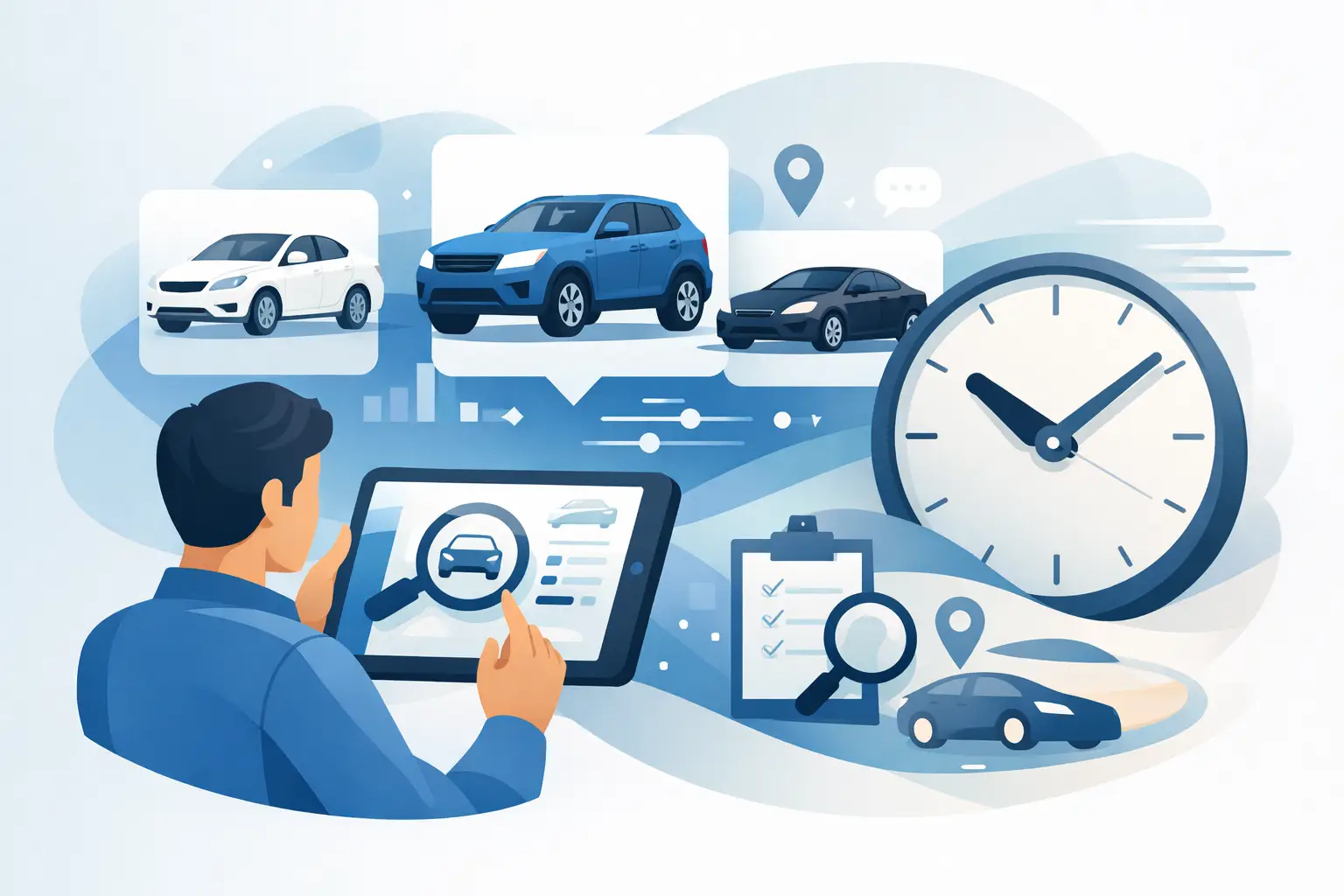
Most shoppers do not struggle with a lack of options. They struggle with too many tabs, too many repeated listings, and too little signal. That is where vehicle discovery matters. It is the part of the search process that helps you move from broad interest to a short list you can actually act on.
For some buyers, that means finding a used SUV under a fixed monthly budget. For others, it means locating a work truck with specific towing specs or comparing sedans across several brands without wasting an afternoon. The goal is the same: reduce search friction, surface relevant options fast, and make the next step obvious.
What vehicle discovery really means
Vehicle discovery is the process of finding, narrowing, and evaluating vehicles across digital channels before you contact a seller, request a quote, or schedule a test drive. It starts earlier than most people think. Often, it begins with a loose need, not a vehicle in mind.
A growing family may start with cargo space and safety. A commuter may start with fuel economy and price. A first-time buyer may start with one hard limit: stay under budget. Good discovery tools help translate those needs into actual inventory, useful comparisons, and cleaner decision paths.
That sounds simple, but the market makes it harder than it should be. Listings vary in quality. Vehicle details may be incomplete. Prices can look attractive until fees, mileage, condition, or location change the picture. Discovery is not just about seeing more cars. It is about seeing the right cars sooner.
Why vehicle discovery breaks down online
The digital car market is efficient in one way and messy in another. You can search thousands of listings in minutes, but speed does not always produce clarity. Many shoppers lose time because the discovery process is poorly organized.
The first problem is weak filtering. If a search tool lets you filter by make and model but not by key decision factors like price range, drivetrain, mileage, body style, or ownership history, results become noise. The second problem is inconsistent listing data. Missing trim details, vague condition notes, and low-quality photos slow decision-making because the shopper has to verify basics manually.
There is also the issue of comparison fatigue. Two vehicles can appear similar on screen while being very different in real ownership cost. One may have better service history, lower miles, and stronger resale value. The other may only look cheaper at first glance. When discovery tools do not surface those distinctions early, buyers end up doing extra work later.
Better vehicle discovery starts with the right inputs
Shoppers often begin with the wrong question. They ask, "What car should I buy?" A better question is, "What problem am I solving?" That shift improves search quality immediately.
If your priority is city parking and low operating cost, your search should reflect that from the start. If your priority is space for three car seats, that matters more than brand loyalty. If you drive long highway miles each week, comfort and fuel range may beat a lower sticker price.
The best discovery process begins with a small set of non-negotiables. Budget is usually first, but not only budget. You also need to define use case, acceptable mileage, preferred age range, and whether features like all-wheel drive or advanced driver assistance are required or just nice to have.
This is where many shoppers save time by being strict early. Broad searches feel flexible, but they often create delay. A narrower search may return fewer results, yet those results are more likely to be useful.
How to evaluate listings without wasting time
Once your search is focused, the next step is reading listings with discipline. Not every detail deserves equal attention. Some fields are far more predictive of whether a vehicle belongs on your shortlist.
Start with the basics: price, mileage, model year, trim, and location. Then look at what supports the price. Are there enough photos to assess condition? Is there a VIN? Is service history mentioned clearly? Does the description explain upgrades, wear, or known issues, or is it generic filler?
A good listing reduces uncertainty. A weak listing creates it. That does not always mean a weak listing hides a bad vehicle, but it does mean more follow-up work. If two similar vehicles are available and one has complete details while the other is vague, the better-documented listing usually deserves attention first.
It also helps to read for omission. If a vehicle is older, high-mileage, or priced below market, condition details matter more. If those details are missing, the low price may not be a real advantage. Discovery is not just spotting attractive listings. It is identifying which options are likely to hold up under closer review.
The role of filters, categories, and platform design
Good platform design does more than look clean. It changes how quickly a shopper can move from search to action. In vehicle discovery, this matters a lot.
Useful filters do not simply narrow results. They help buyers think. When a platform organizes vehicles by practical categories such as family, commuting, commercial use, budget range, or body style, it reduces the mental load of comparing unrelated options. A buyer who starts with a need can reach relevant inventory faster.
That is especially useful for shoppers who are not sure what model they want. A first-time buyer may not know the difference between trims or the trade-off between compact SUVs and midsize sedans. A well-structured discovery experience bridges that gap without forcing the user to become an expert first.
This is also where a connector platform has real value. Instead of acting like a single-source inventory wall, it can help users move across the fragmented market with less repetition and fewer dead ends. That utility-first approach fits how people actually shop online.
Vehicle discovery is not the same for every buyer
A mistake many platforms make is treating all shoppers the same. But discovery needs change based on timing, experience, and intent.
A shopper replacing a car after an accident is usually speed-driven. They need immediate availability, local results, and simple financing signals. A planned buyer with three months to decide may care more about market trends, feature comparisons, and long-term value. Someone shopping for a second household vehicle may prioritize reliability over style and be more open on make and model.
Trade-offs matter here. The fastest path is not always the cheapest path. The lowest-priced vehicle is not always the best ownership fit. The broadest search is not always the smartest one. Good discovery helps users understand what they are optimizing for so they do not confuse activity with progress.
What strong vehicle discovery looks like in practice
In practical terms, strong vehicle discovery has a few clear traits. It gives users relevant choices early. It makes filters useful instead of decorative. It presents enough listing detail to support real comparison. And it helps buyers move from browsing to decision without unnecessary backtracking.
That can mean showing nearby options first when location matters. It can mean surfacing similar vehicles if the original search is too narrow. It can mean organizing inventory so users can compare body styles or price bands without resetting their search each time.
The key point is efficiency. Buyers do not need more content. They need cleaner paths. AutosLinks reflects that idea well because the real value in this category is not adding more noise. It is making access simpler.
How shoppers can improve their own discovery process
Even the best platform cannot fix a vague search. Shoppers still need a method. Start by setting a firm total budget, not just a target payment. Then define the top three requirements that actually affect daily use. After that, compare only vehicles that meet those standards.
Resist the urge to mix every possibility into one giant search. Separate practical options from aspirational ones. Keep luxury trims, project vehicles, and bargain outliers out of the same shortlist if your goal is efficiency. That separation makes decisions faster and less emotional.
You should also know when to stop researching. If five or six listings meet your criteria and pricing is within market range, more browsing may not produce a better outcome. At some point, better vehicle discovery means recognizing that the search phase is complete and the next step is verification.
The car market will probably stay crowded, fragmented, and full of duplicated information. That is not likely to change soon. What can change is how you move through it. The more clearly your search reflects your actual needs, the easier it becomes to spot the vehicles worth your time and ignore the rest.