
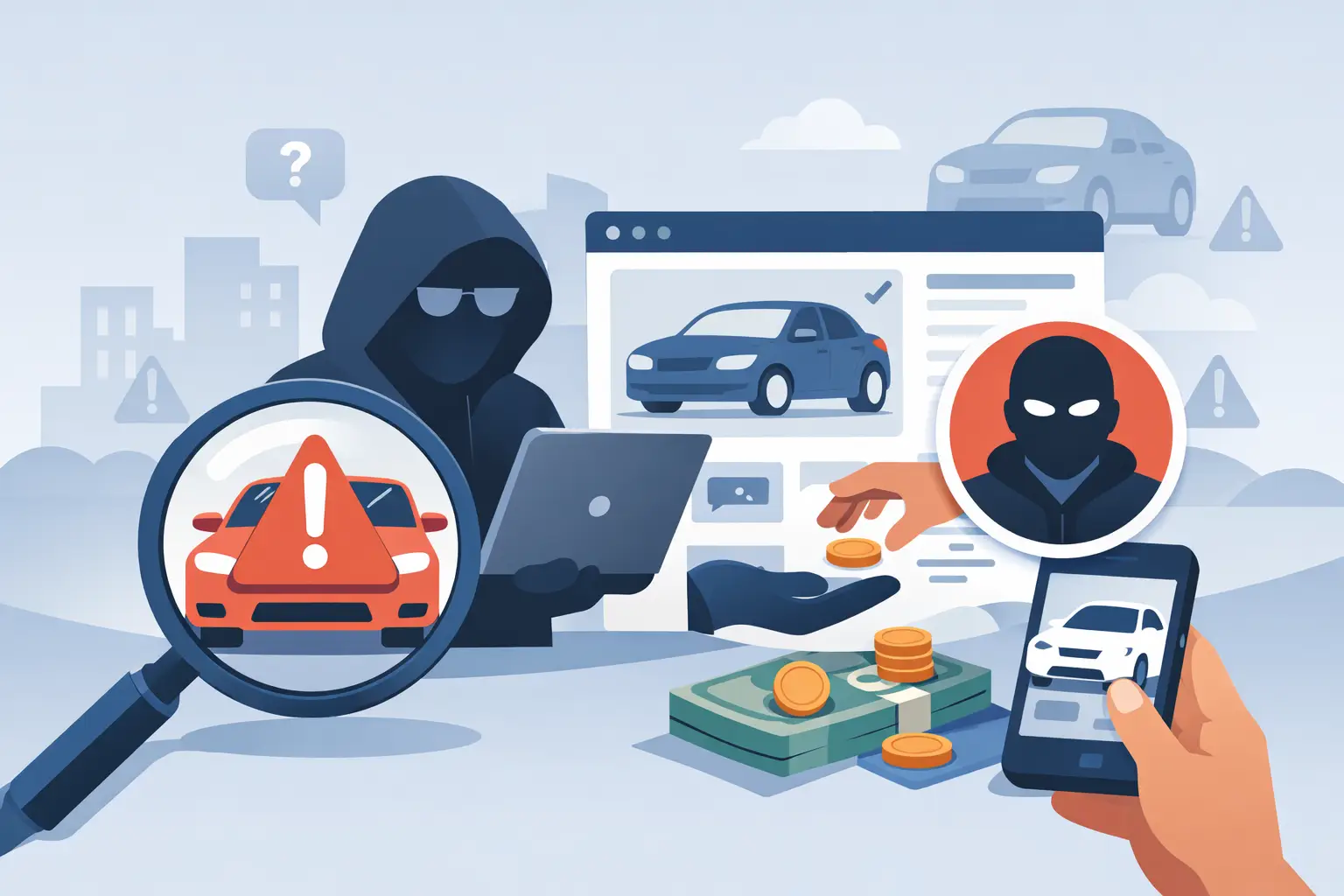
A car listed at $8,900 when similar models are closer to $13,000 should slow you down, not speed you up. If you want to know how to avoid fake car ads, start by treating any listing that looks unusually cheap, unusually urgent, or unusually vague as a problem to verify before you click, call, or send money.
Why fake car ads keep working
Fake listings are built to catch buyers at the exact moment they want a fast deal. The ad looks clean, the price is tempting, and the seller often creates pressure right away. They may claim they are relocating, deploying, handling a family emergency, or selling on behalf of someone else. The story is meant to explain why the car is priced low and why normal steps need to be skipped.
That matters because many buyers are not careless. They are simply busy. Online car shopping rewards speed, and scammers use that. A real listing can disappear quickly, so buyers are used to acting fast. The trick is learning where speed helps and where it creates risk.
How to avoid fake car ads before you contact the seller
The first screen is the ad itself. Most fake car ads start giving signals before any message is sent.
Price is usually the clearest one. A low price alone does not prove fraud, but a price that is far below market without a solid reason deserves scrutiny. Compare the year, mileage, trim, title status, accident history, and location against similar listings. If the ad is dramatically cheaper and the description does not explain why, assume there is missing information or a scam attempt.
Photos are another fast check. If the images look like they came from different cars, different climates, or different time periods, stop there. Look for inconsistent license plates, mixed backgrounds, dealer watermarks on a supposedly private sale, or interior shots that do not match the trim level being advertised. Blurry photos can also be a tactic. They hide damage, hide dashboard warnings, and make it harder to run image checks.
The description should also sound like a real seller wrote it. Scam ads often read like copied text with generic claims such as "runs perfect," "no issues," or "must sell today" without basic details. A real seller usually knows the car's maintenance history, recent repairs, tire condition, title status, and why they are selling. If the listing says almost nothing specific, that is useful information.
Red flags that usually mean a fake car ad
Some patterns show up again and again. A seller who refuses phone calls and wants to keep everything on email or messaging apps is a risk. So is a seller who cannot answer basic questions about trim, mileage, title status, or service history.
Watch for location mismatches. If the ad says the vehicle is in Dallas but the seller's story keeps shifting to another state, that is a problem. If the area code, photos, registration details, and meeting location do not line up, do not ignore it.
Payment pressure is one of the biggest warnings. Fake sellers often ask for a deposit before a meeting, before a test drive, or before sharing the VIN. They may ask for wire transfers, gift cards, crypto, or payment apps with no buyer protection. That is not just unusual. In most private-party transactions, it is enough reason to walk away.
Shipping stories are another common setup. The seller claims the car will be delivered after payment through a third-party service or an "escrow" company you have never heard of. The goal is to keep you from seeing the car in person while making the process sound official. If the vehicle cannot be inspected before money changes hands, the transaction does not move forward.
Verify the car, not just the story
A believable seller story does not matter if the vehicle details do not hold up. Ask for the VIN early. If the seller avoids sharing it, says they do not have it, or sends a number that does not match the vehicle details, move on.
Once you have the VIN, check whether the year, make, model, engine, and trim align with the ad. If the listing claims one trim but the VIN decodes to another, there may be misrepresentation. Sometimes that means a sloppy ad. Sometimes it means the seller copied details from another listing.
Also compare the VIN to the photos. Serious buyers should ask for a photo of the VIN plate on the dashboard or door jamb and make sure it matches the number provided in messages. If the seller will not send it, that is a useful answer.
Title status needs the same treatment. A clean-title claim should be verifiable. If the seller becomes vague when asked whether the title is in their name, whether there is a lien, or whether the car has salvage or rebuilt history, slow down. These are basic ownership questions, not advanced ones.
Check whether the seller is real
A fake ad often falls apart when the seller has to prove they actually own the car. Ask direct, practical questions. How long have you owned it? Where was it serviced? Are there two keys? Is there a payoff amount on the loan? When can the title be shown in person?
The answers should be clear and consistent. Real sellers may not respond instantly, but they usually respond specifically. Scammers tend to redirect, repeat the same scripted lines, or push you back toward payment and shipping.
If you speak by phone, listen for gaps between the ad and the conversation. A seller who listed a truck but cannot describe the drivetrain, bed length, or recent maintenance is not someone to trust quickly. That does not mean every private seller knows every spec. It does mean they should know enough to prove they have been around the vehicle.
For local deals, insist on an in-person meeting in a public place during daylight hours. If possible, meet somewhere practical for a vehicle transaction, such as a bank parking lot or near a mechanic where a pre-purchase inspection can happen. A seller who keeps changing the meeting place or refuses a public meetup is raising the risk level.
Use a pre-purchase inspection as a fraud filter
A pre-purchase inspection is not only about mechanical issues. It is also one of the best ways to expose fake or deceptive ads. Sellers running scams usually do not want an independent mechanic involved because it requires a real car, a real appointment, and a real identity.
If the seller refuses any inspection, claims there is no time, or says their own mechanic already checked it, do not treat that as enough. On the other hand, there are edge cases. A seller with a very low-priced older car may not want to drive far for an inspection. That does not automatically mean fraud, but it does mean you should adjust your offer and your caution level. The less verification you get, the less risk you should take.
Payment rules that protect you
The safest move is simple: never send money for a car you have not seen and verified. That includes deposits. A small deposit can feel harmless, but scammers use it because buyers rationalize the amount. Once money is sent, recovery is difficult.
When you are ready to buy, use a payment method that leaves a clear record and fits the transaction. Cashier's checks and bank-facilitated payments are common, but the process should happen in a controlled setting where both parties can verify identity and documents. If there is a lien, the payoff process should be transparent. If the seller cannot explain how the title will be transferred, the deal is not ready.
Be careful with urgency. A seller who says five other people are on the way may be telling the truth. It may also be pressure. The right response is not to rush. It is to verify faster. Efficient buyers still check the VIN, title, identity, and inspection path before committing.
A practical mindset for how to avoid fake car ads
Most buyers do not get trapped because they miss one giant warning. They get trapped because several smaller warnings are explained away by a low price. That is the pattern to break.
A useful rule is to make the seller earn trust step by step. First the ad should make sense. Then the photos should make sense. Then the VIN should make sense. Then the ownership story should make sense. Then the in-person meeting and inspection should happen. If any step fails, the listing does not get the benefit of the doubt.
That approach is especially helpful in an online-first market where hundreds of listings can blur together. Platforms like AutosLinks help reduce search friction, but the final check still belongs to the buyer. A clean listing is not proof. Verification is proof.
The good news is that fake car ads are often easier to avoid than they first appear. Slow the process just enough to confirm the basics, and most bad listings reveal themselves before they cost you money.