
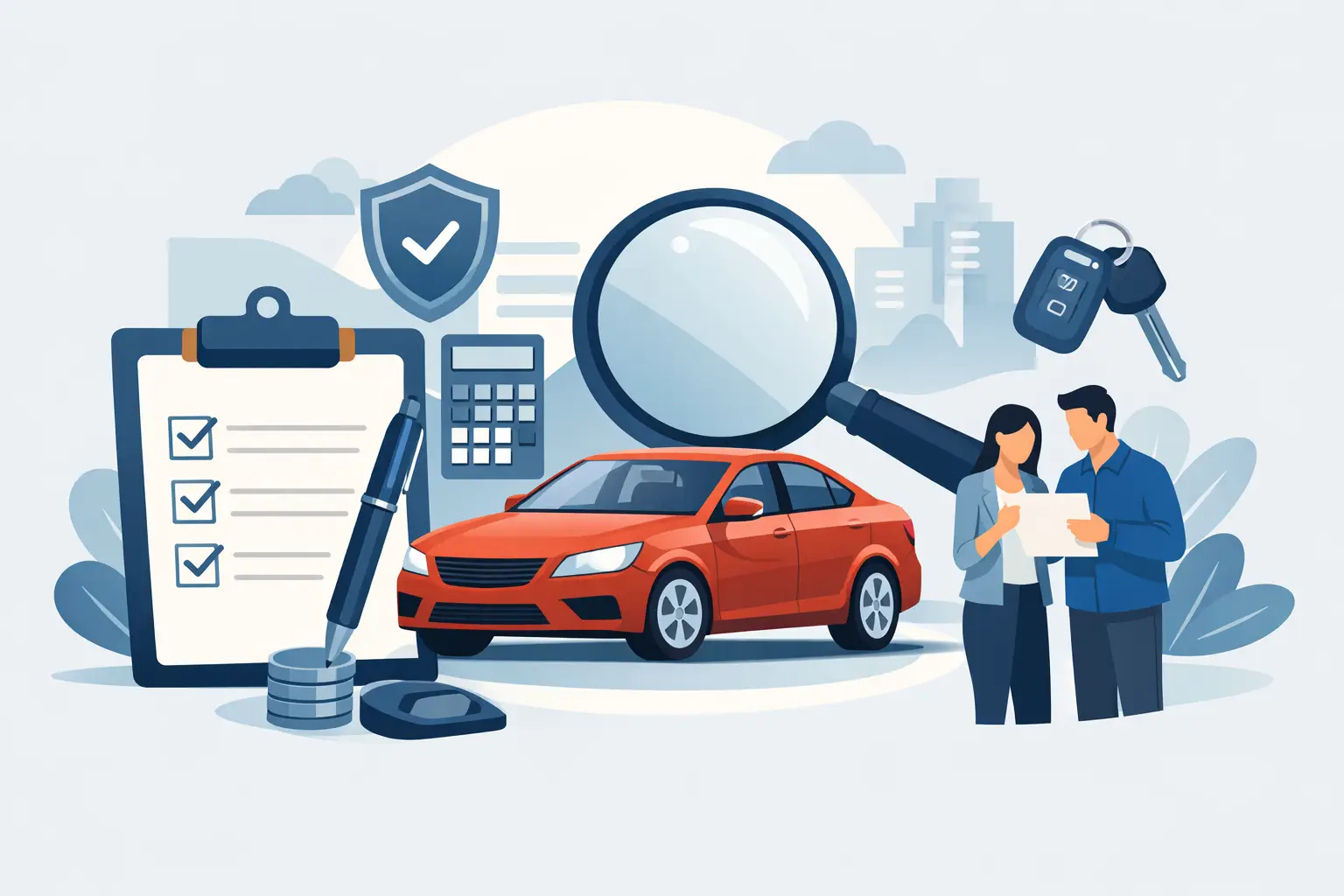
A car can look right in photos and still be the wrong buy by the time you factor in price, fees, financing, insurance, and condition. That is why a car shopping checklist guide matters. It keeps the process organized, cuts down impulse decisions, and helps you compare vehicles based on real costs instead of quick impressions.
What a car shopping checklist guide should do
A useful checklist is not just a reminder to test drive a few cars. It should help you move through the full buying path in order - budget, research, vehicle comparison, inspection, financing, paperwork, and ownership costs. If any one of those steps gets skipped, the deal can go sideways fast.
Most buyers do not lose money because they picked a bad brand. They lose money because they rushed one part of the process. Sometimes that is financing. Sometimes it is overpaying for a trim level they do not need. Sometimes it is missing signs of prior damage on a used vehicle. A checklist keeps each step visible.
Start with the number that actually matters
Before you compare models, set a total monthly budget and a total out-the-door budget. Those are not the same thing. A low monthly payment can still hide a longer loan term, higher interest, or expensive add-ons. The out-the-door price includes taxes, registration, dealer fees, and any extras added to the contract.
It also helps to define your trade-off range early. You may want lower mileage, newer features, and a lower payment, but most shoppers have to give on at least one. Knowing which factor matters most saves time later.
If you are buying used, leave room in your budget for maintenance in the first year. If you are buying new, check insurance before you commit. Some vehicles look affordable until the premium shows up.
Budget items to confirm before you shop
Know your down payment, target monthly payment, estimated insurance cost, registration cost, fuel cost, and expected maintenance. If you have a trade-in, get a realistic value range before stepping into negotiations. If you plan to finance, check your credit profile and secure preapproval if possible.
Preapproval does two things. It gives you a benchmark rate, and it makes dealer financing easier to evaluate. Sometimes the dealer can beat your preapproved rate. Sometimes they cannot. Either way, you are comparing offers with real numbers instead of guessing.
Build a short list instead of browsing endlessly
The fastest way to waste hours is to shop without filters. Start with three categories: must-haves, nice-to-haves, and deal breakers. Must-haves might include all-wheel drive, a backup camera, enough rear-seat space, or a maximum price. Nice-to-haves may include leather seats or a premium audio system. Deal breakers are the items that remove a car from consideration immediately.
This step matters because two vehicles with similar prices can serve very different needs. A commuter sedan, compact SUV, and midsize truck are not interchangeable just because they fit the same budget.
Use your short list to compare real use, not just specs. Think about where the car will spend most of its time. City driving, long highway commutes, growing family needs, winter weather, and weekend hauling all change what counts as a good fit.
Compare ownership, not just sticker price
A cheaper vehicle may cost more over time if it burns more fuel, carries higher insurance, or has weaker reliability. A higher trim might be worth it if it includes safety features you would otherwise pay extra for. On the other hand, appearance packages often raise the price without improving daily use.
If two models are close, use practical tie-breakers. Check cargo space with seats up, rear legroom, visibility, infotainment ease, and how easy it is to get in and out. These details matter more after six months than they do during a five-minute walkaround.
Use the checklist at the dealership or listing stage
Once you narrow your search, move from general research to vehicle-specific checks. For a new car, that means confirming trim, options, availability, incentives, and final fees. For a used car, it means confirming condition, history, title status, service records, mileage, and whether the asking price matches the market.
This is where a car shopping checklist guide becomes practical. You are no longer asking, "Do I like this car?" You are asking, "Does this exact car make sense at this exact price?"
For used vehicles, check the tires, brakes, lights, glass, paint consistency, panel gaps, and signs of water damage or poor repairs. Inside the cabin, test every major function - windows, locks, screen, climate controls, seat adjustments, camera, and ports. Small failures are not always deal breakers, but they do change value.
Open the hood and look for anything that seems recently cleaned in one area and neglected everywhere else. That can signal an attempt to hide leaks. During startup, listen for rattles, hard starts, or warning lights that stay on.
Never skip the test drive
A test drive should be long enough to show normal behavior. A quick loop around the block is not enough. Drive on local roads and, if possible, at highway speed. Test braking, acceleration, steering feel, road noise, visibility, and seat comfort.
Pay attention to whether the vehicle pulls to one side, shifts harshly, vibrates, or hesitates under throttle. In a used car, even minor issues can point to larger repair costs. In a new car, the test drive is more about fit and confidence. A car may be mechanically fine but still wrong for your daily routine.
Bring your phone, child seat, garage measurements, or anything else that reflects real use. Practical fit is easy to overlook in the showroom.
Review financing and fees line by line
This is where buyers often lose control of the deal. The vehicle price is only part of the transaction. Review the full buyer's order or purchase sheet and separate the following: vehicle price, taxes, registration, documentation fee, optional products, trade-in value, and financing terms.
Optional products are where costs can climb fast. Extended warranties, maintenance plans, GAP coverage, wheel protection, and add-on accessories may be useful in some situations, but they are not automatic wins. It depends on the vehicle, your loan structure, and your tolerance for risk.
For example, GAP coverage can make sense if you are financing a large amount with a small down payment. A prepaid maintenance plan may be less useful if you drive very little. An extended warranty may be worth considering for a complex used vehicle, but less necessary for a new model with strong factory coverage.
Check the loan term carefully. Stretching a loan from 60 to 84 months can lower the monthly payment while increasing total interest and keeping you upside down longer. Lower payment does not always mean better deal.
If you are buying used, add one more checkpoint
Get an independent pre-purchase inspection whenever the sale allows it. This is one of the simplest ways to avoid expensive surprises. A clean test drive is helpful, but it is not the same as a mechanic putting the car on a lift.
Some sellers push back on inspections. That does not always mean the car is bad, but it does raise the risk. If you are comparing several used vehicles, the one with clear records and no resistance to inspection usually saves time.
For online-first shoppers using platforms like AutosLinks to move quickly between listings and resources, this step helps slow the process down at the right moment. Speed is useful in search. It should not replace verification before purchase.
The final paperwork check
Before you sign, confirm the VIN matches the vehicle, the agreed price matches the contract, and every fee is explained. Make sure optional products are there because you chose them, not because they were preloaded into the paperwork.
If the numbers changed from your earlier discussion, stop and ask why. Sometimes there is a valid reason. Sometimes there is not. Either way, this is the point to catch it.
Also confirm what comes with the car: extra keys, owner's manuals, charging cable if applicable, floor mats, spare tire or repair kit, and any promised repairs or due-bill items in writing. Verbal promises do not help much after delivery.
A checklist works best when it stays simple
The point of a checklist is not to turn car buying into a spreadsheet exercise with no judgment. It is there to make sure the obvious and expensive mistakes do not happen. You still need to weigh trade-offs. A great price on the wrong vehicle is still the wrong purchase. A slightly higher price on the right vehicle can be the better move if condition, financing, and ownership costs line up.
If you keep your process focused on budget, fit, condition, and final numbers, most decisions get clearer. The best car to buy is usually not the one that created the most excitement. It is the one that still makes sense after you check everything twice.